If you’ve been posting on social media for your business and feel like your reach has quietly dropped over the past year or two, you’re not imagining it. It’s not bad luck, and it’s not because your content suddenly got worse.
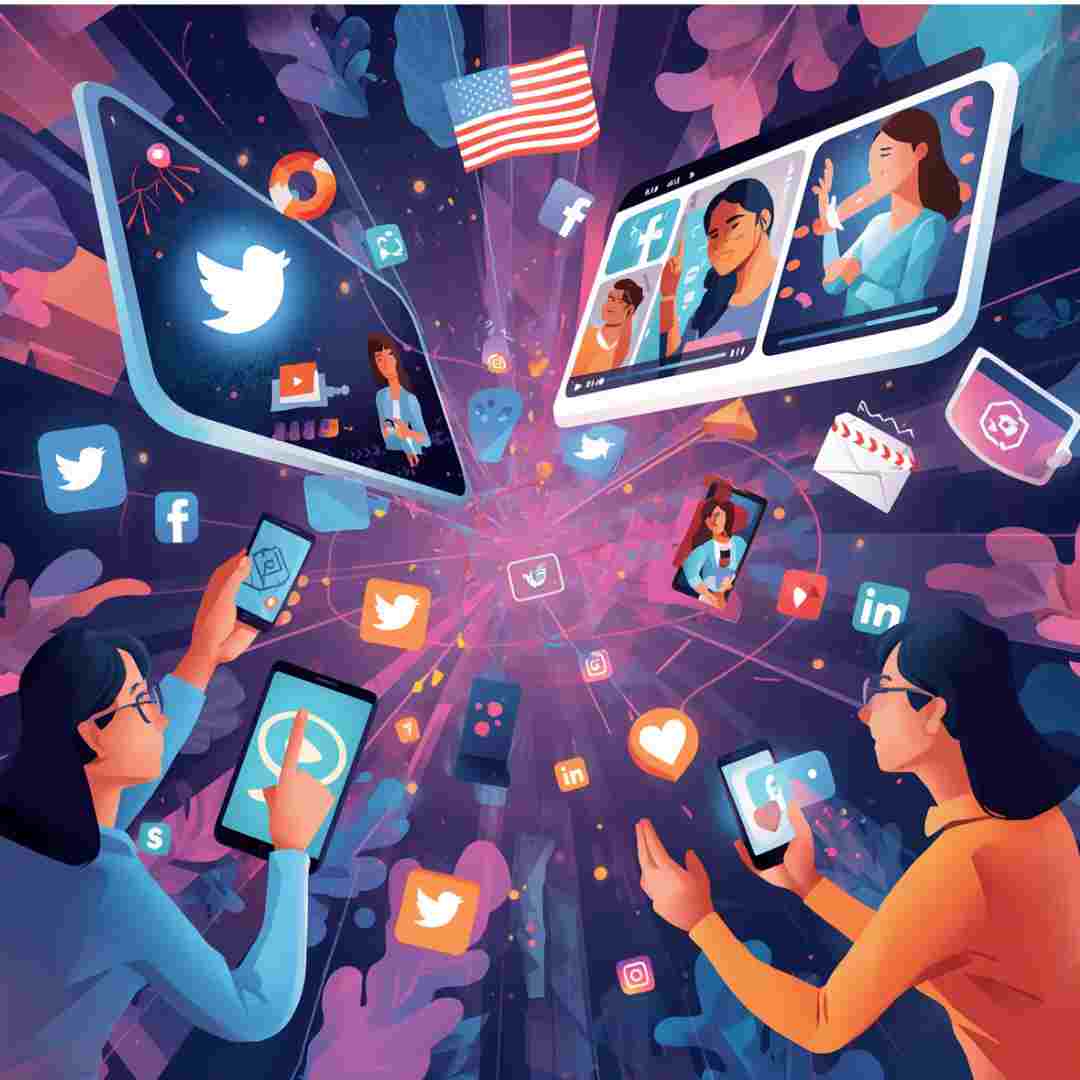
It’s because every major platform — Facebook, Instagram, TikTok, and LinkedIn — has shifted hard toward video, and the algorithms now actively favour it. Static images and graphics, once the bread and butter of small business marketing, are being shown to fewer and fewer people by default.
This isn’t a trend that’s going to reverse. If anything, it’s accelerating. Here’s why video outperforms images across the board, what the platforms are actually rewarding, and how to start producing video content even if you don’t have a camera crew or a marketing team.
Why platforms are pushing video so aggressively
To understand why your image posts aren’t performing the way they used to, it helps to understand what social platforms are actually optimising for: time spent on the app.
Every platform makes money by keeping people scrolling for as long as possible, because more time on the app means more opportunities to show ads. Video — especially short-form video — is simply better at this than static images.
A photo can be absorbed in under a second. A video, even a short one, holds attention for longer. Multiply that across millions of users, and the platform’s overall “time spent” metric goes up significantly when video is shown more often. So the algorithm shows more video, because video keeps people on the platform longer — which is exactly what the platform wants.
This is true across the board:
- TikTok was built entirely around this principle from day one
- Instagram has openly stated that video (particularly Reels) is prioritised in its discovery feeds
- Facebook now blends Reels and video content throughout the main feed, not just in a separate tab
- LinkedIn has been rapidly expanding its video features and giving video posts a visibility boost as it competes for attention
If your content strategy is still built primarily around static graphics, you’re competing for a shrinking slice of attention — on every platform at once.
The numbers: how big is the gap, really?
While exact figures vary by platform, study, and industry, the consistent pattern across multiple independent analyses is that video content reliably outperforms static images on:
- Reach — video posts are shown to a larger percentage of your audience (and beyond your existing audience, into “discovery” feeds of people who don’t follow you yet)
- Watch time and engagement — video naturally encourages longer interaction with a post
- Shareability — short, useful, or entertaining videos get shared and saved at much higher rates than graphics
- Comments — video tends to generate more conversation, particularly when there’s a person speaking directly to the viewer
The gap isn’t marginal — on platforms like Instagram and TikTok, it’s common for video content to reach several times more people than an equivalent static post, even when both are well-designed.
It’s not just about reach — it’s about trust
There’s a second, often-overlooked reason video performs better for businesses specifically: it builds trust faster than any other content format.
When a potential customer sees a real person — explaining something, answering a common question, or showing how a service works — they form an impression of your business that a logo or a graphic simply can’t deliver. Tone of voice, facial expression, confidence, clarity — these are all trust signals that come through in video and nowhere else.
This matters enormously for service-based businesses. Someone deciding whether to hire a web designer, book a consultation with a medical practice, or trust a legal firm with their case is making a decision based on more than price — they’re deciding whether they trust the people behind the business. Video shortens that trust-building process dramatically.
“But I don’t have time to film videos every week”
This is, by far, the most common objection — and it’s a fair one. Producing video content the traditional way (filming, editing, voiceovers, lighting, multiple takes) is genuinely time-consuming, and for a lot of business owners, it’s the reason video keeps getting pushed to “next month.”
This is exactly the problem that AI avatar video tools like HeyGen solve.
Instead of filming yourself, you write a script (or have one written for you), and an AI-generated presenter delivers it — with natural lip-sync, professional presentation, and consistent quality every time. No camera, no studio, no retakes because someone sneezed halfway through.
This means a business can realistically produce a steady stream of short, polished, educational videos — the exact content type the algorithms are rewarding — without the production overhead that used to make video impractical for small businesses.
A simple framework for getting started
If you’re starting from zero, here’s a manageable approach:
- Make a list of 10–15 questions your customers ask you most often, or topics that confuse people in your industry
- Turn each one into a 30–45 second script — keep it focused on one idea per video
- Produce them in batches using an AI avatar tool, so you’re not starting from scratch each time
- Repurpose the same video across platforms — export in the right format for each (vertical for TikTok and Reels, square or vertical for Facebook)
- Pair each video with a short caption and, where relevant, a link to a more detailed blog post for people who want to go deeper
This turns video content creation from an occasional scramble into a repeatable system — which is exactly what the algorithms reward most: consistency.
Don’t abandon images entirely
None of this means static graphics are useless. Images still have their place — for announcements, quotes, infographics, and certain types of carousel content. But if video makes up 0% of your current content mix, that’s the gap costing you the most reach right now.
The goal isn’t to do everything perfectly from day one. It’s to start — even one short video a week is a meaningful shift from zero.
How Prime Designs can help
At Prime Designs, video content production is now a core part of how we help businesses build a consistent, professional social media presence — without the time and cost of traditional video production.
We handle the full process: identifying topics your audience is actually searching for, writing scripts, producing polished AI avatar videos, and pairing each one with SEO-optimised blog content — so every video works double duty as both a social media post and a piece of long-term search visibility.
Want to see what a content plan for your business could look like?
Send us a message on WhatsApp and we’ll talk through it.
Or visit us at prime-designs.co.za to see our full range of digital marketing services.
Pime Designs is a full-service web design and digital marketing agency based in South Africa. We help established businesses grow their online presence through strategic web design, SEO, and paid advertising.