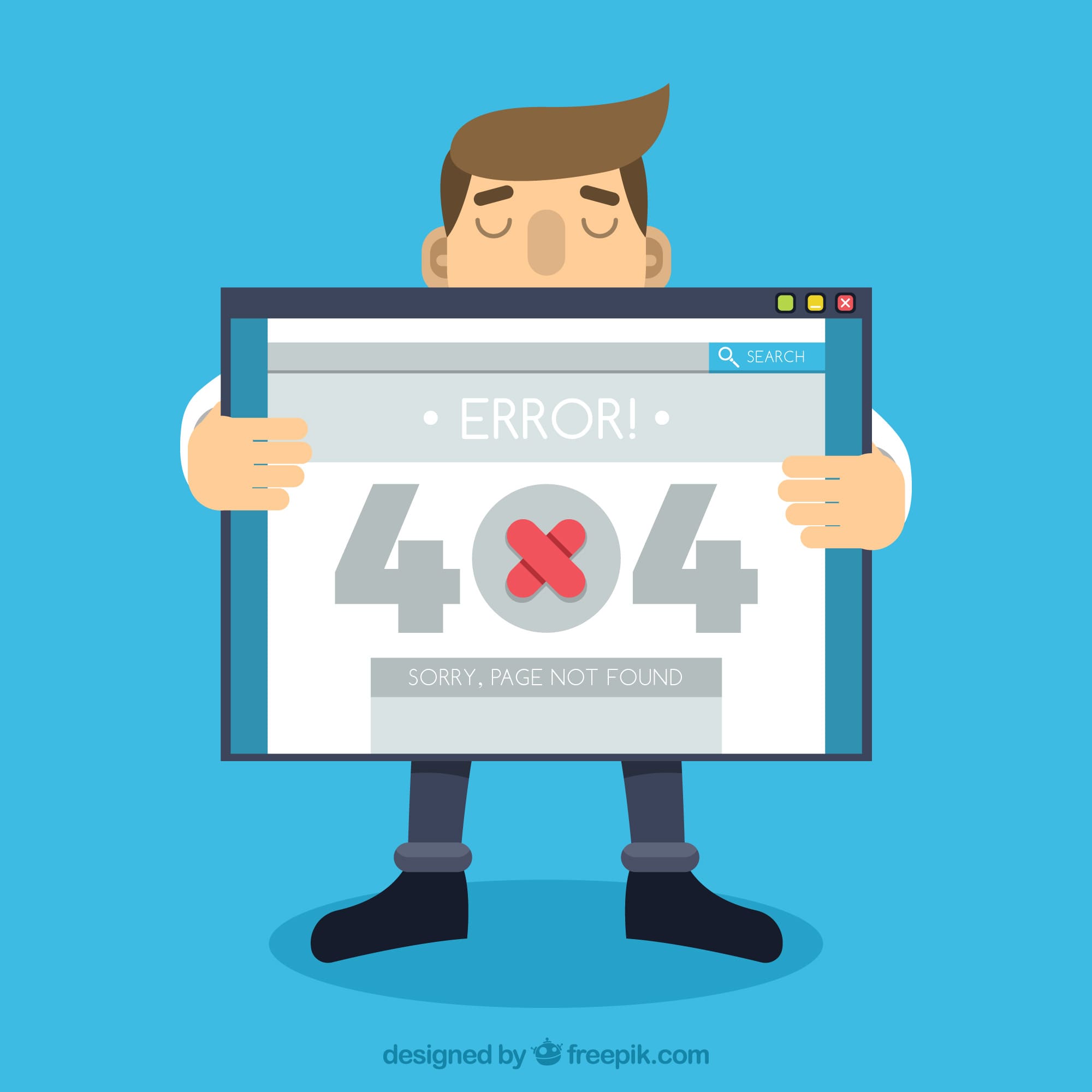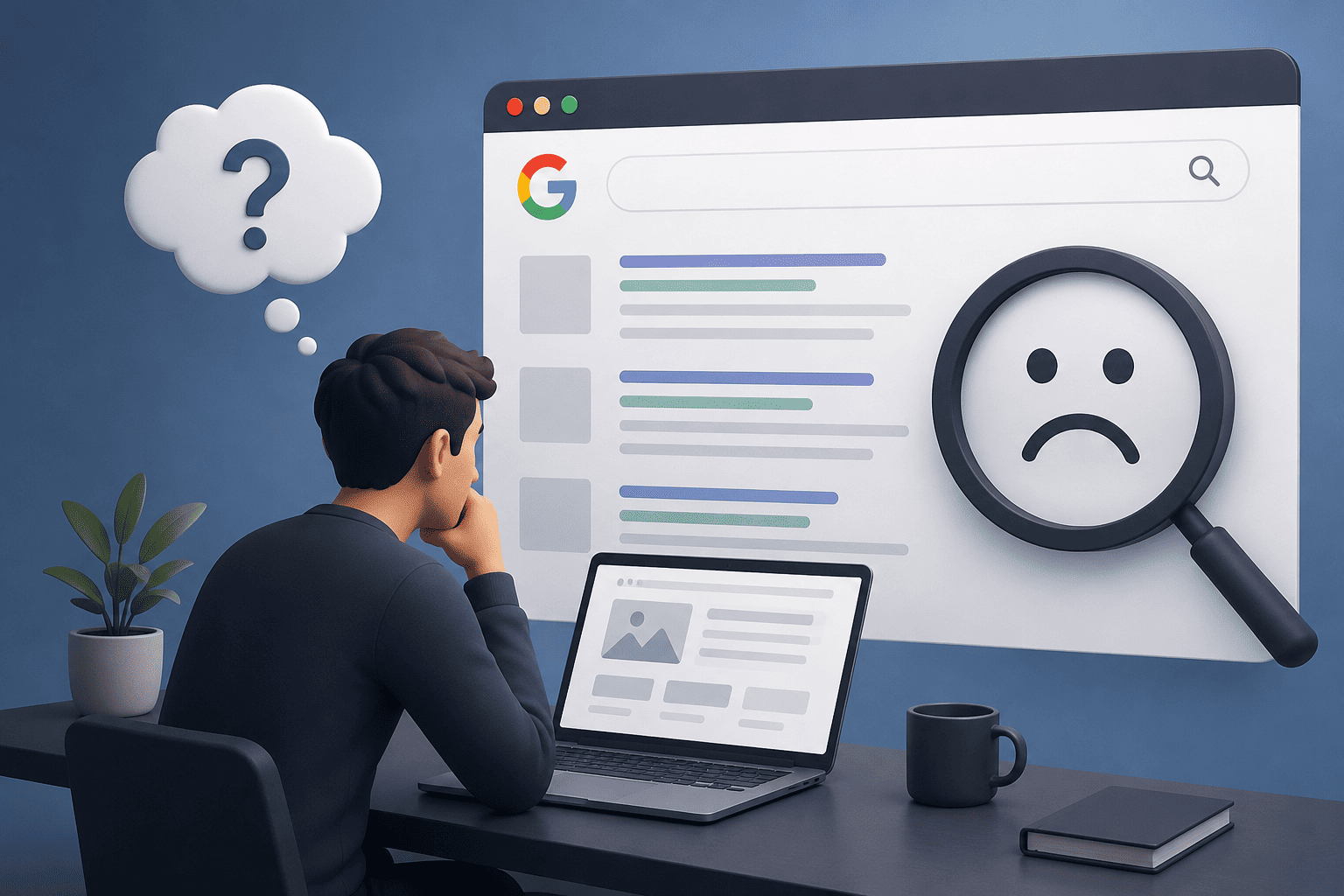
Most business owners think of their website as a digital brochure — something that sits there looking presentable while the real business happens elsewhere. But here’s the uncomfortable truth: a poorly performing website isn’t just doing nothing for you. It’s actively driving customers away.
Every day that your website has a problem, potential customers are landing on it, forming an impression in under 5 seconds, and either contacting you — or leaving to find your competitor.
The tricky part? Most of these problems are invisible to the business owner. You’ve seen your website so many times it looks normal to you. But a first-time visitor experiences it very differently.
Here are the five most common signs your website is costing you customers, how to spot them, and exactly what to do about each one.
Sign 1: Your website takes more than 3 seconds to load
Speed is not a nice-to-have. It’s the first filter every visitor applies before they’ve even read a word on your page.
Google’s own research found that as page load time increases from 1 second to 3 seconds, the probability of a visitor bouncing — leaving immediately — increases by 32%. Go from 1 second to 5 seconds, and that bounce probability jumps to 90%.
Think about that for a moment. Nearly 9 out of 10 people who might have been your customers leave before they’ve seen anything.
And it doesn’t end with the user experience. Page speed is a direct Google ranking factor. Slow websites rank lower in search results, which means fewer people find you in the first place. A slow website creates a double problem: less traffic and a higher exit rate from the traffic you do get.
Common causes of slow websites:
- Images that haven’t been compressed or resized for the web (a single unoptimised photo can add 2–3 seconds of load time on its own)
- Cheap or geographically distant web hosting (a server based in the US or Europe will always load slower for South African visitors than one hosted locally)
- Too many plugins or third-party scripts running in the background
- No caching set up, meaning the server rebuilds the page from scratch on every single visit
How to check your speed: Go to pagespeed.web.dev and enter your URL. You’ll get a score out of 100 and a list of specific issues to fix. Anything below 50 on mobile is a serious problem. Anything above 80 is healthy.
What to do: Start with your images — compress every image on your website using a free tool like TinyPNG or Squoosh before uploading. Switch to quality local hosting with a South African or Johannesburg-based server. If you’re on WordPress, install a caching plugin like WP Rocket or W3 Total Cache.
Sign 2: Your website doesn’t work properly on mobile
This one surprises a lot of business owners, because they built and approved their website on a desktop computer — and it looked great. But more than 60% of South African internet traffic now comes from mobile devices. If your website isn’t optimised for mobile, you are presenting a broken experience to the majority of your visitors.
“Doesn’t work properly on mobile” can mean a range of things:
- Text that’s too small to read without zooming in
- Buttons that are too close together to tap accurately
- Images that spill off the edge of the screen
- Navigation menus that break or overlap on smaller screens
- Forms that are frustrating or impossible to complete on a phone
- Contact buttons that aren’t click-to-call enabled
Any one of these issues creates friction. And friction kills conversions. Someone who can’t easily read your content or find your contact details on their phone won’t call you — they’ll find someone whose website works.
How to check: Open your website on your own phone and navigate through it honestly. Then try Google’s free Mobile-Friendly Test at search.google.com/test/mobile-friendly. It will flag specific issues in seconds.
What to do: If your website was built before 2018 and has never been updated, it very likely needs a rebuild with a mobile-first approach. Modern websites are designed for mobile first, then scaled up for desktop — not the other way around. At Prime Designs, every website we build is fully responsive across all screen sizes, tested on real devices before launch.
Sign 3: Visitors can’t figure out how to contact you
This is the most direct way a website loses customers, and it’s shockingly common.
A visitor who has read your content and decided they’re interested in your services should be able to contact you within two or three clicks — ideally within seconds of landing on the page. If they have to hunt for your contact details, they won’t. They’ll leave.
Here’s what poor contact accessibility looks like in practice:
- Your phone number or email is only on the Contact page, buried at the bottom of the navigation
- There’s no WhatsApp button, despite this being the dominant communication channel in South Africa
- Your contact form has too many required fields (people won’t fill out a 12-field form to ask a simple question)
- Your contact page doesn’t have a physical address or area of operation, creating distrust
- There’s no click-to-call functionality on mobile, so the phone number is just text that can’t be tapped
- Your website has no live chat or WhatsApp widget for visitors who want an immediate response
How to check: Land on your homepage as a stranger would. Close your eyes for a moment, open them, and time how long it takes to find a way to contact you. If it takes more than 5 seconds, it’s too long.
What to do: Your phone number should be visible in the top header on every page. Add a sticky WhatsApp button that follows visitors as they scroll — in South Africa, this single change has one of the highest conversion impacts of anything you can do to a website. Simplify your contact form to the essentials: name, phone number or email, and a brief message. Make your phone number clickable on mobile.
Sign 4: Your website looks outdated
Design is trust. Before a visitor reads a single word about your qualifications, experience, or pricing, they’ve already made a subconscious judgement about your business based on how your website looks.
Research from Stanford University found that 75% of people judge a company’s credibility based on the design of its website. Not its content. Its design.
An outdated website communicates several things, none of them good:
- “We don’t care enough about our business to invest in it”
- “We’re not keeping up with our industry”
- “We might not be around much longer”
And this is especially true in South Africa, where the gap between well-designed and poorly-designed business websites is often large. When your competitor has a clean, modern website and yours looks like it was built in 2013, the prospect chooses them — not because they’re actually better, but because they look more credible.
Signs of an outdated website:
- Stock photos that look generic or low quality
- No real photos of your team, premises, or work
- Small fonts, low-contrast text, or poor colour choices
- Cluttered layouts with too much competing for attention
- Outdated branding that doesn’t match your current business
- No testimonials, case studies, or proof of results
What to do: You don’t necessarily need a full rebuild. Sometimes a visual refresh — updating fonts, colours, imagery, and layout — can transform how a website feels in a matter of weeks. But if the underlying structure is old, a proper rebuild will serve you better long-term. Book a free consultation with us and we’ll give you an honest assessment.
Sign 5: There’s no reason for visitors to trust you
Even if your website is fast, mobile-friendly, easy to navigate, and beautifully designed — if it doesn’t give visitors a reason to trust you, they won’t convert.
Trust is the invisible currency of a website. And it’s built through specific signals that tell a visitor: “This is a legitimate business. Other people have used them and been happy. I’m safe to reach out.”
The most powerful trust signals for a South African business website:
Real testimonials from named clients. A quote attributed to “John M., Johannesburg” is almost worthless. A testimonial with a full name, company name, and ideally a photo carries genuine weight. Even better — a short video testimonial.
Your Google rating prominently displayed. If you have a strong Google Business Profile rating, display it on your website. This is independently verified social proof that visitors recognise immediately.
A portfolio or case studies. For service businesses especially, showing your actual work — before and afters, completed projects, results achieved — does more persuading than any copy you can write.
Real photos of your team and premises. Stock photography of smiling people in generic offices makes visitors trust you less, not more. Real photos of real people create human connection.
Clear communication of who you serve and where. “We work with businesses across the Garden Route and Western Cape” immediately tells a George or Knysna business owner: “these people understand my market.”
An active blog or content section. Regularly published, genuinely useful content tells Google and your visitors that you’re engaged, current, and expert in your field.
How to check: Read your website as a complete stranger who has never heard of your business. Would you trust this company enough to call them? What would make you more confident? What questions are left unanswered?
How many of these signs apply to your website?
One or two: You have a solid foundation with some specific gaps to address. Focus on the highest-impact fixes first — speed and mobile are usually where you’ll recover the most lost customers quickly.
Three or four: Your website is likely costing you a meaningful number of customers every month. Some targeted improvements combined with better SEO and lead capture could significantly change your results in the next 90 days.
All five: A website rebuild is worth seriously considering. The cumulative effect of all five problems means your website is actively working against you, and patching individual issues on a broken foundation often costs more in the long run than starting fresh.
Frequently Asked Questions
How much does it cost to fix a slow website? It depends on the cause. Image optimisation and caching are often free or very low cost. Upgrading to better hosting typically costs R200–R800 per month depending on the plan. A full rebuild starts from around R8,000 for a small business site.
Do I need to rebuild my entire website, or can I fix individual problems? Often both options are viable. If your website’s core structure and design are sound, targeted fixes — improving speed, adding a WhatsApp button, updating imagery, adding testimonials — can make a significant difference without a full rebuild. We assess this honestly in our free audit.
How long does a website redesign take? A standard 5–7 page business website typically takes 3–5 weeks from brief to launch. eCommerce sites take longer depending on the number of products and integrations required.
Will fixing these issues improve my Google ranking? Yes — several directly. Page speed, mobile-friendliness, and SSL security are confirmed Google ranking factors. Improved trust signals and time-on-site metrics also indirectly influence rankings over time.
How do I get a free website audit from Prime Designs? Simply visit our contact page at prime-designs.co.za/contact and mention you’d like a website audit. We’ll review your site and give you a straightforward report on what’s working, what isn’t, and what we’d recommend.
The bottom line
Your website is your most important sales tool. It’s the only member of your team that works 24 hours a day, 7 days a week, 365 days a year. When it works well, it generates enquiries while you sleep. When it doesn’t, it silently turns away the customers you worked hard to attract.
The five signs above aren’t technical problems. They’re business problems — each one directly connected to lost revenue. The businesses that treat their website as a serious sales asset, and invest in keeping it performing, consistently outgrow the ones that don’t.
Ready to find out exactly what’s holding your website back?
👉 Get your free website audit from Prime Designs — we’ll review your site and give you a clear, honest assessment with no obligation.
Prime Designs is a full-service web design and digital marketing agency based on the Garden Route, South Africa. We help businesses get online, get found, and get results — Real People. Real Strategy. Real Results.